Humanicate
By Marion R. Banks. Chief Communication at Humanicate, Co-founder of The Game Influencers and Director at The Communication Faculty.
Ever since the COVID-19 pandemic, there has been a sharp increase in institutions requiring professional assistance to counter reputational damage. This damage has, in some instances, threatened the very existence of these businesses.
There are two phenomena primarily responsible for this, both of which were a factor before the pandemic but which have since become more noticeable. Join me as I explore these phenomena and shed some light on how best to circumvent the reputational landmines businesses must contend with in this strange yet wonderful post-pandemic world.
Social Consciousness
The first phenomenon that emerged a few decades ago is the significant shift in our social consciousness. This refers to our collective awareness of how we affect our planet and other people and how they affect us. It informs our understanding of critical social issues, such as cultural and societal norms.
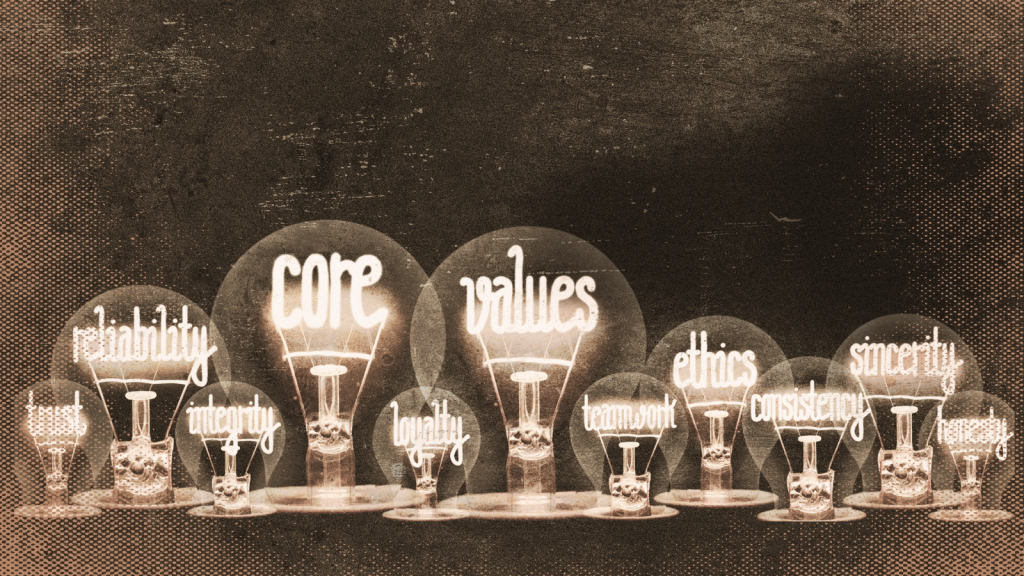
Global studies show that most people now want to wake up every day knowing they are making a meaningful contribution to our world in some shape or form. This trend spills over into how we choose jobs, consume, and engage with businesses.
In the past, businesses had to have functional value only, but we now expect them to have social and emotional value as well, which is also what led to the emergence of brands. To help clients understand this, I usually explain it as follows: “You can no longer look at your business as an entity that offers a product or service. You now have to be a brand – and a brand is a persona delivering a product or service plus an experience. This experience is, in turn, determined by prevailing social and emotional factors.”
Digital media channels
The second phenomenon is the advent of the internet, social media, and digital channels such as emails and WhatsApp. While we are all too familiar with this by now, we may have yet to consider the far-reaching implications for our businesses. In reality, every single business scandal that has surfaced over the past five years became a scandal because of the existence of these digital channels.
Some of these may sound familiar… An internal memo leaked via email by a disgruntled employee. A contract that was sent to the media by a supplier who disagreed with the lack of principles the business displayed. A video of poor treatment by staff that clients shared on social media. Smear campaigns that were tactically instigated by competitors or lawyers who wanted to leverage the power of the masses for their own agendas.
In every single one of these instances, the businesses in question sustained significant reputational damage within hours, none of which would have been possible without the existence of digital media channels.
What does this mean for business?
As mentioned, these phenomena have irrevocably changed how we approach the topic of business reputation. Based on what I’ve observed from some of the significant business scandals that have featured in the news over the past two or three years, as well as cases I’ve personally assisted clients with, I’ve gained six critical insights:
- Your reputation is now one of your top business assets
Because of the prevailing social consciousness, your business reputation is now one of your most important assets. In my professional opinion, it is probably the one true business asset because, without it, you are ruined, regardless of how great your product or service may be. As we have recently seen, even some top brands have been brought to their knees because of misconduct that has come to light. Please don’t make the mistake of thinking that this problem applies only to big businesses, though. Arguably, it is even more critical for sole proprietors or small firms, which rely almost solely on repeat business from existing clients or word-of-mouth referrals.
- Others now shape your business narrative.
The words of Jeff Bezos, Executive Chairman of Amazon, come to mind: “Your brand is what people say about you when you are not in the room.” Even though those of us who play in the brand space have been preaching this for years, it is now more valid than ever. The latest Global Consumer Index, for example, indicates that most people now look at online reviews first before they make a purchasing decision, and they also ask for recommendations within their social circles. I have witnessed this myself as I belong to a Facebook group called “Ek is van die Ooste”, which consists of approximately 60,000 members who live in and around Pretoria East. Here, people refer and recommend businesses almost hourly, but sadly, they also “name and shame” businesses, often without considering the legal consequences or potential libel suits.
- You will get “stalked” online.
Once again, this trend does not apply only to corporates – it is also true for consultants and sole proprietors. Without exception, people now “Google” you before they meet you to see what you’re all about, and what they see will determine the rules of engagement after that. If you don’t have a proper digital footprint – or you have no digital footprint at all – people will immediately become suspicious and start asking questions about you. The meaning of each of the elements that make up your digital presence has also changed. For example, having a website is essential to confirm your credibility, but people will also visit social media channels to see what others say about you.
- You have to give equal weight to all six business capitals.
Again, regardless of the size of your business, and due to the prevailing social consciousness, it will serve you well to consider the international principles of integrated reporting in your strategy. However, you must demonstrate how you leverage all six business capitals (business inputs) to generate optimal value (output) for all your stakeholders, as opposed to just focusing on the financial or intellectual capital. The six capitals are financial, manufactured, intellectual, human, social and relationship, and natural. Being cognizant of this in your business strategy will help you shape a value-creation story that will resonate with your target audiences and build a business reputation that is good by design.
- You can no longer “spin” the narrative about your business.
Traditionally, those of us in PR and communication were viewed as “spin doctors” who could transmute a negative story into a positive one by portraying a business in a favourable light. I have never been a supporter of this, as it is most definitely not sustainable. Today, however, this approach wouldn’t work – even if I was willing to help a business this way. You can no longer sweep misconduct under the carpet as it is bound to quickly come to light on some of the digital media channels. This means you now have to constantly consider the impact of every business decision and action on everything and everyone within your sphere of influence. Besides, communication can never be a quick fix for operational issues, and if you make brand promises you cannot keep, the world will be talking about it soon enough.
Where do I start?
Without the fundamentals, your business reputation is a house of cards that could collapse at any moment. For this reason, I recommend that every company, big or small, embarks on an exercise to develop a fully integrated business communication strategy. By this, I mean a strategy that leverages communication as your most powerful tool to drive and support your business goals and objectives. Such a strategy will ensure you know exactly what to say and when, where, and to whom.
If you already have a communication strategy, you should revise it and revise it regularly because the way we need to communicate has departed substantially from previous ways of communicating.
At the same time, you should apply an intellectual formula to construct your value proposition in a way that considers the most critical building blocks of a modern-day, relatable brand. Because your stakeholders are no longer just your clients and shareholders, you have to create a much broader definition of who these stakeholders are, and what value you can create for them.
In addition, you must ensure that whatever you communicate is always premised on the key pillars of a “good reputation”, as this will minimise reputational risk and help you navigate crises far more seamlessly.
In the interim, be sure to establish a solid digital presence with a professional website and well-thought-through content at the very least. Be sure to supplement this with social media pages where you share strategically formulated messaging that is of true value to your target audiences. At the end of the day, you can count on the fact that there will be a conversation about you, sooner or later, so it is up to you to control that narrative – for as far as possible. For expert assistance or training for reputation management or crisis communication, email info@humanicate.co.za.